Shadow work

Meet the parts of you that you pushed away.

When something triggers you hard, or you judge someone strongly, it often points to a part of you that you've disowned. Shadow work is how we turn towards it, calmly, so it runs you a little less.

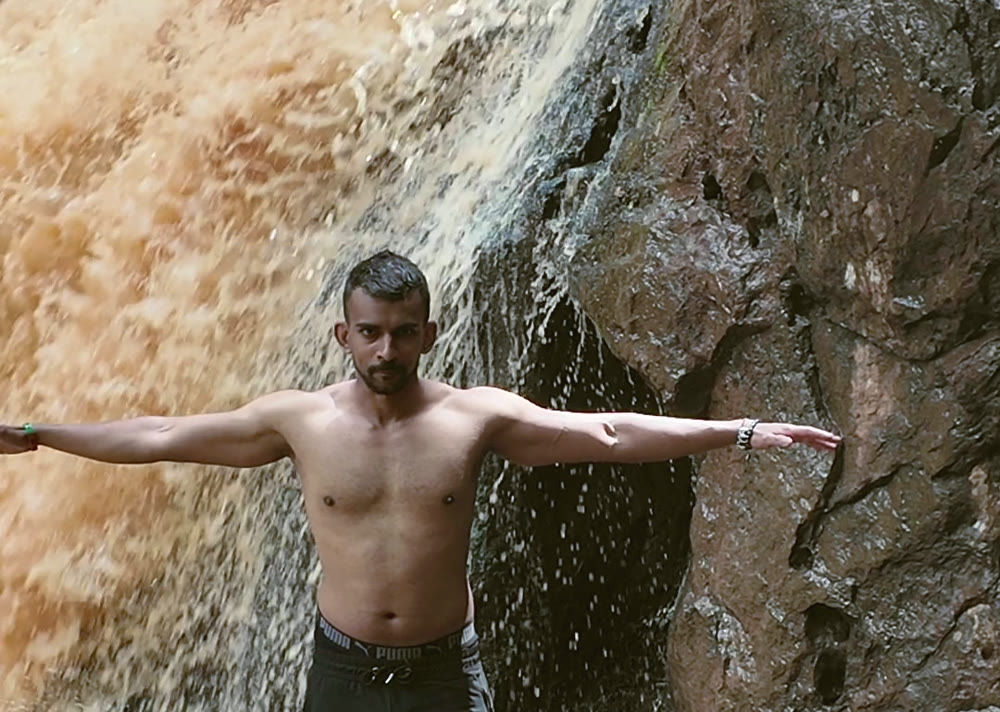
Gin with arms wide in front of a waterfall
In plain words

Inner work and shadow work

You don't need to know any of these words to begin. I'll explain them simply.

Inner work

Inner work means looking at what goes on inside you, so it runs you a little less. Your reactions, your old stories, your habits, the way your body tenses up. It's slow and honest, and you do it on purpose.

For exampleYou snap at your partner over something small. Later, you sit down and ask what actually got touched in you.

Shadow work

The idea of the shadow comes from Carl Jung, the Swiss psychiatrist. He used it for the parts of ourselves we don't see, or have pushed away because they felt unacceptable: anger, need, envy, weakness, desire. The shadow can hold good things too, like strength or confidence you learned to hide. Shadow work is a modern name for turning towards those parts, so they leak out sideways less often.

For exampleA man who brags really gets under your skin. When you look closer, you might find a part of you that wants to be seen and has never let itself ask for it.

How I work

Shadow work in a session

01

Shadow work

Meet the parts you pushed away

This draws on Carl Jung's idea of the shadow. When something triggers you hard, or you judge someone strongly, it can point to a part of you that you've disowned. We look at it calmly and give it a place again.

In a session. In a session I'll take one recent trigger and slow it right down with you. We follow it back to the part of you that's reacting, and you practise owning it.

For you if you keep reacting in ways you later regret and can't explain why.

The toolbox

Shadow work techniques

A few of the exercises we might use. We only use what fits you.

  • Shadow workTrigger mapping

    Walk back through a trigger step by step: what happened, what you felt, what you did, what it touched.

  • Shadow workProjection check

    When you judge someone strongly, ask whether some of that same thing lives in you.

  • Shadow workInner child letter

    Write to your younger self, or let him write to you, and listen to what he needed.

  • Shadow workParts dialogue

    Give the angry part, the scared part and the critic each a voice, and let them talk.

See all the ways I work

Going gently

Shadow work is not therapy

Shadow work can bring up strong feelings. We go at your pace, and you can always say stop. If something feels too big, or touches trauma, we slow down or stop, and I'll point you to a qualified therapist.

If you're in crisis, please don't wait for a session. In Denmark, call 112 or Livslinien on 70 201 201.

Your next chapter

Ready to talk?

Start with a free 30-minute conversation about where you are, what feels stuck, and what you want to change.

Coaching isn't therapy. I don't diagnose or treat mental health conditions. If you're in crisis or thinking about harming yourself, please reach out now. In Denmark, call 112 or Livslinien on 70 201 201. Anywhere else, find a free helpline at findahelpline.com. Breathwork in my sessions is gentle. If you're pregnant, or have epilepsy, a heart condition or a history of panic attacks, tell me before we start.

Book a free call